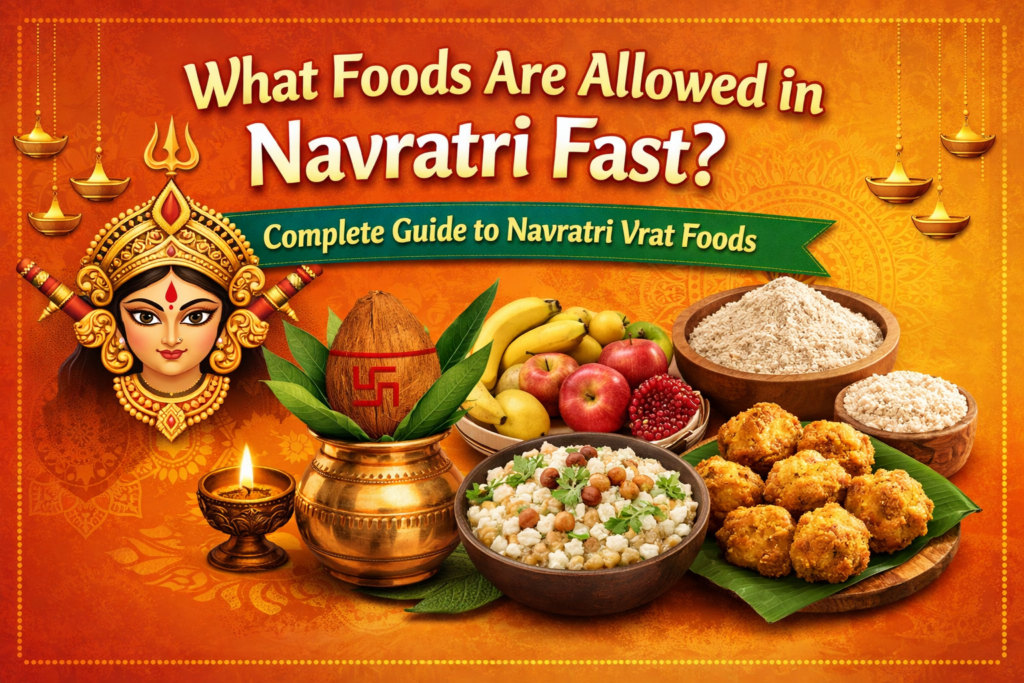
Navratri is one of the most sacred Hindu festivals celebrated with devotion, prayers, and fasting. During these nine auspicious days dedicated to Goddess Durga, many devotees observe fasts to purify their mind and body. A common question people ask during this festival is what foods are allowed in Navratri fast and which foods should be avoided.
Understanding what foods are allowed in Navratri fast helps devotees follow the fasting rules properly while still maintaining good health and energy throughout the day. Navratri fasting is not about starving but about consuming pure, sattvic, and light foods that support spiritual discipline.
In this guide, we will explain what foods are allowed in Navratri fast, including fruits, dairy products, vrat flours, and other commonly consumed fasting ingredients.
Fruits Allowed During Navratri Fast
Fruits are considered one of the most important foods during fasting. They are light, nutritious, and easy to digest. When discussing what foods are allowed in Navratri fast, fruits are always at the top of the list.
Some commonly consumed fruits during Navratri fasting include:
- Bananas
- Apples
- Papaya
- Pomegranate
- Oranges
- Grapes
- Guava
- Mango (seasonal)
Fruits provide natural energy, vitamins, and hydration, which makes them perfect for people observing Navratri fast. Many devotees also prepare fruit salads or smoothies as part of their vrat meals.
When planning your fasting diet, remembering what foods are allowed in Navratri fast can help you include a variety of fresh fruits for balanced nutrition.
Dairy Products Allowed in Navratri Fast
Dairy products are widely consumed during fasting because they provide protein and energy. If you are wondering what foods are allowed in Navratri fast, dairy items are an important category.
Common dairy foods eaten during Navratri include:
- Milk
- Curd (Dahi)
- Paneer
- Buttermilk
- Lassi
- Ghee
Milk-based drinks and sweets are very popular during Navratri fasting. Many people prepare dishes like kheer, lassi, or paneer-based vrat recipes.
Including dairy products is helpful when following the guidelines of what foods are allowed in Navratri fast, as they keep you full for longer periods.
Vrat Flours Allowed During Navratri
Regular wheat flour is not consumed during Navratri fasting. Instead, special fasting flours are used to prepare rotis, puris, and snacks. When learning what foods are allowed in Navratri fast, vrat flours are essential.
Some common fasting flours include:
- Kuttukaatta (Buckwheat flour)
- Singharaatta (Water chestnut flour)
- Rajgiraatta (Amaranth flour)
- Samak rice flour (Barnyard millet flour)
These flours are used to prepare delicious fasting dishes like kuttupuri, rajgiraparatha, and singharahalwa. They provide energy while following traditional fasting rules.
Understanding what foods are allowed in Navratri fast ensures that you choose the correct ingredients while preparing vrat meals.
Vegetables Allowed During Navratri Fast
Not all vegetables are allowed during fasting. Only certain vegetables that are considered pure and easy to digest are consumed. When people search for what foods are allowed in Navratri fast, they often want to know which vegetables can be eaten.
Common vegetables allowed during Navratri fasting include:
- Potatoes
- Sweet potatoes
- Pumpkin
- Raw banana
- Bottle gourd (Lauki)
- Cucumber
- Tomato
Potato-based dishes are particularly popular during Navratri. Recipes like vrat wale aloo, alootikki, and aloochaat are commonly prepared.
Knowing what foods are allowed in Navratri fast helps you prepare delicious and satisfying meals while following fasting traditions.
Dry Fruits and Nuts for Navratri Fasting
Dry fruits and nuts are excellent sources of energy and nutrients during fasting. They are often included in snacks or desserts.
Some commonly consumed dry fruits include:
- Almonds
- Cashews
- Walnuts
- Raisins
- Pistachios
- Makhana (fox nuts)
Makhanakheer and roasted makhana snacks are very popular during Navratri fasting. These foods are both healthy and filling.
Including dry fruits is another important part of understanding what foods are allowed in Navratri fast, especially for people who need sustained energy during the day.
Rock Salt (SendhaNamak)
One important rule of Navratri fasting is that regular table salt is not used. Instead, rock salt known as sendhanamak is used in cooking.
Sendhanamak is considered pure and is traditionally used in all vrat recipes. Whether you are preparing sabzi, snacks, or kheer, rock salt is the preferred seasoning.
People often ask about spices while searching what foods are allowed in Navratri fast, and the main rule is to keep food simple and sattvic.
Popular Navratri Fasting Dishes
Once you understand what foods are allowed in Navratri fast, you can prepare many delicious fasting recipes.
Some popular Navratri dishes include:
- Sabudanakhichdi
- Sabudanavada
- Kuttupuri with aloosabzi
- Singharahalwa
- Makhanakheer
- Fruit chaat
- Samak rice pulao
These dishes are light yet nutritious and help devotees maintain energy during fasting days.
Learning what foods are allowed in Navratri fast makes it easier to plan meals for the entire nine-day festival.
Foods to Avoid During Navratri Fast
Just as it is important to know what foods are allowed in Navratri fast, it is also necessary to know which foods should be avoided.
Foods generally avoided during Navratri fasting include:
- Wheat flour
- Rice (regular rice)
- Lentils (dal)
- Onion and garlic
- Non-vegetarian food
- Processed food
The purpose of avoiding these foods is to maintain purity and discipline during the fasting period.
Health Benefits of Navratri Fasting
Navratri fasting is not only a spiritual practice but also beneficial for health. By consuming light and nutritious foods, the digestive system gets a break from heavy meals.
When you understand what foods are allowed in Navratri fast, it becomes easier to follow a balanced fasting diet that includes fruits, dairy, nuts, and vrat grains.
Some benefits of Navratri fasting include:
- Improved digestion
- Detoxification of the body
- Better mental clarity
- Increased spiritual focus
This is why many people look for information about what foods are allowed in Navratri fast before starting their fasting routine.
If you love easy fasting sweets, you should also try this Coconut Ladoo Vrat Recipe – a quick and delicious nariyal ladoo perfect for fasting days.
Follow us on Instagram for product updates, offers & latest arrivals.